
Strategic by default
You get someone who will tell you that cleaning up four thousand expired inventory URLs is worth more this quarter than a content calendar, and explain the reasoning instead of defending a deliverable.
Industries
Car buyers and service customers search long before they show up. We build the rankings, the Maps presence and the model, service and location pages that put you in front of them, for inventory, fixed ops, and the buyer-intent searches that end in a call.
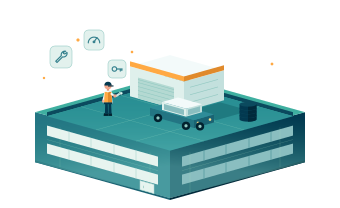
We work with automotive, local service and growth-focused companies that want senior SEO judgment and someone who will do the work, without the account layers or the reporting theater of a traditional agency.










What we do
One person owns the whole picture: the technical foundation under a high-turnover site, how your models, services and rooftops are structured, your Google Business Profile, the content behind the buying decision, the authority that supports it, and tracking that ties a search to a sold unit or a repair order.
You get the senior strategist in the seat rather than an account manager relaying notes. In automotive that matters because the big calls (fixed ops versus sales, which rooftops get budget) are judgment, not tasks.
Most dealer sites run on a locked platform where expired inventory URLs pile up and templates repeat across rooftops. We fix crawling, indexing and redirects first, because Google cannot rank pages it struggles to read.
Shoppers now ask an assistant which trim to buy or what a repair should cost before they ever open Google. Getting cited in those answers rewards specific, well-structured content rather than page count.
Inventory turns over, so durable rankings live on model, trim and service pages that outlast the cars on the lot. Every rooftop and every service line needs a page with a reason to exist.
Content with teeth: what a timing belt actually costs, whether to lease or finance, which trim is worth the jump. Those are the questions people work through before they walk onto a lot.
For service work, and for anyone typing a dealer name plus a city, the map pack is the business. Categories, proximity, review velocity and consistent listings decide it. Blog volume does not.
Links are what separate two dealers sitting on the same OEM template. We chase the ones an automotive business can genuinely earn, not the ones sold by the thousand.
Traffic means little if you cannot tell which visit became a test drive or a repair order. We set up tracking that follows a search through to the CRM and the service scheduler.
Generic SEO agencies struggle in automotive because the inventory moves faster than the index. A vehicle detail page is often sold before it ranks, so the durable rankings have to live somewhere else. Marketplaces and the manufacturer hold the broad queries. The service department, which frequently carries more gross profit than the showroom, is usually one page and a scheduler link. And the website is often a locked OEM-approved platform. We work as your senior SEO, owning strategy and doing the execution across technical, local, content, authority and AI visibility, measured in leads rather than sessions.
How this compares
Three ways an automotive business usually solves this, and what each one costs you in seniority, speed and attention.
Fractional SEO
Straight to Results →
Agency SEO
The Long Way Around →
Straight to Results →
You work directly with a senior SEO who knows your business.
No templates. Just what moves the needle for you.
No black boxes. Just clarity.
The Long Way Around →
You rarely work with experienced SEOs.
Cookie-cutter strategies for everyone.
You start over again and again.
| Fractional SEO | A traditional agency |
|---|---|
| Who does the work | |
| Fractional SEO: One senior SEO with over a decade of enterprise experience, who plans the work and then does it. Inventory pages, service, local and tracking held in one head. | A traditional agency: Usually a junior, briefed secondhand by someone who is not doing the work. |
| Who you talk to | |
| Fractional SEO: The same person every time, on a call every two weeks. | A traditional agency: An account manager who carries your questions to the team and the answers back. |
| What it costs | |
| Fractional SEO: From $2,500 a month, scoped to the work actually in front of you. | A traditional agency: A fixed retainer, billed whether or not the month earned it. |
| How long you are tied in | |
| Fractional SEO: Six months to start, then month to month, with 30 days' notice. | A traditional agency: Commonly a twelve-month agreement, up for renewal before you have had time to judge it. |
| What the first 90 days produce | |
| Fractional SEO: A full SEO and AI-search audit, the quick wins already implemented, and a six-month plan you can see. | A traditional agency: Discovery, a strategy deck, and work starting somewhere in month two. |
| How success is measured | |
| Fractional SEO: Test drives, trade-in valuations, finance applications and service appointments, tied back to the pages that produced them. | A traditional agency: Sessions, impressions and keyword positions. |
| What you own | |
| Fractional SEO: The strategy, the accounts and the documentation, all in your name from day one. | A traditional agency: Often held by the agency or the dealer website vendor, and hardest to get back at the moment you want to leave. |
An agency is the better call when you need paid media, creative and SEO run as one programme, or when the volume of execution is past what one senior person can cover. We will say so on the call rather than take the retainer.
One partner. One strategy. One clear path to growth.
Senior expertise and real strategic leadership, without the overhead, the account layers, or execution that gets diluted before it reaches your site or your stores.
Industry challenges
Automotive is not a generic local SEO problem. You compete across inventory that turns over weekly, national marketplaces, model-level queries, map pack service searches and reviews spread across several platforms.
The challenge
A vehicle detail page goes live, sits for a few weeks, and the car is gone before Google has settled on where that page belongs. The URL then 404s, and a store with real turnover accumulates thousands of dead pages that soak up crawling and strand internal links. The result is a site made mostly of pages Google has no reason to keep.
How we solve it
We move the ranking weight onto pages that persist (model, trim, body style and location combinations that stay live regardless of what is on the lot) and feed live inventory into them. Expired VDPs get redirect rules pointing at the surviving page a shopper actually wanted, instead of a 404.
The challenge
Autotrader, Cars.com, CarGurus and Carvana have spent two decades building the authority behind broad queries like "used SUV under $25,000," and the manufacturer's own site sits on top of the brand terms. One rooftop is not going to displace them there, and a year spent trying is a year not spent elsewhere. The searches a dealer can realistically win go uncovered in the meantime.
How we solve it
We concede the queries that are not winnable and go after the ground where being local is the advantage: model plus city, trim comparisons, financing and trade-in questions, and "near me" service terms. Lead quality tends to be higher there anyway, because the searcher has already narrowed down.
The challenge
Service and parts often carry a larger share of gross profit than vehicle sales, yet on most dealer sites they get one "Service" page and a scheduler link. "Brake repair near me" and "check engine light" plus a city name are ordinary local searches with steady volume, and the independent shop two miles away is answering them properly. The department funding the store is close to invisible in search.
How we solve it
We build out the service side the way we would build out any local service business: a page per repair line, a separate service department profile where the listing rules allow one, and a review process the service drive can actually run. Bookings are tracked apart from sales leads so the department can see its own return.
The challenge
A dealer group on a single platform usually ships near-identical pages across every store with the city name swapped out. Google picks one and filters the rest, so three stores fight over one position in a metro where they should hold three. Group-level blog content adds to the pile without being attributable to any individual store.
How we solve it
We audit the group for duplication, then differentiate each rooftop on what is genuinely different (inventory mix, service capability, staff, local proof) and set canonical and internal linking rules so the pages stop competing. Where the platform will not allow template edits, we work it out with your vendor or build the exceptions around it.
You get someone who will tell you that cleaning up four thousand expired inventory URLs is worth more this quarter than a content calendar, and explain the reasoning instead of defending a deliverable.
We work alongside your BDC, your service advisors and whichever website vendor your OEM program requires, because a lead only becomes revenue if the handoff at the other end holds up.
Success is counted in test drives booked, service appointments scheduled and leads matched back in the CRM, not in sessions on inventory pages that were never going to rank.
Andrew was amazing to work with from the first time we meet. He was very efficient in updating our existing website to create more activity from our website. I highly recommend Andrew to anyone looking to improve their SEO for better results.
FAQ
Yes. Automotive and local service work make up a large share of what we do. The mechanics carry across the category: inventory that turns over faster than Google can index it, fixed ops competing against independent shops in the map pack, and marketplaces holding the broad queries. What changes store to store is whether sales or service is where the growth actually is, and working that out is the first conversation we have.
Most automotive agencies are built around media buying and co-op compliance, with SEO bundled in and run by a junior on a shared template. The senior person in the pitch sets direction and then steps back. Fractional means that person is the one in the account, planning it and doing it. You also buy the hours you need rather than a fixed retainer, and you keep the strategy, the accounts and the documentation.
Local and Google Business Profile work usually moves first; category and listing fixes can show up within weeks. Technical cleanup on expired inventory URLs needs a crawl cycle or two before the effect is visible. Model, trim and service pages typically take two to four months to settle, and a dense metro takes longer than that. In the first 30 days, expect a prioritised plan and working attribution rather than ranking movement.
Yes, and for service-driven automotive businesses it is usually where we start. That covers primary and secondary categories, service lists, photos, products, posts and Q&A, plus citation cleanup where your name, address and phone disagree across directories and marketplace profiles. Where a dealership qualifies for a separate service department listing, we set it up, because it competes for entirely different searches than the sales listing does. Reviews get a process the service drive can follow.
Yes. Being cited in an AI answer rewards slightly different things than ranking does: direct answers to specific questions, consistent information about who you are and where you operate, and markup that makes your content straightforward to quote. Vehicle and dealer structured data helps here for much the same reason it helps in search. We track where you currently appear for the questions that matter and build from there. It is early, and we will say where the evidence is thin rather than overclaim.
Leads you can trace: test drive requests, trade-in valuations, finance applications and service appointments, attributed back to organic search. That means call tracking, form and chat attribution, and a handoff into the CRM and the scheduler so an organic lead can be followed to a sold unit or a repair order. Reporting comes monthly, separates sales from fixed ops, and leads with what changed in the business rather than in a rank tracker.